
UK newspapers in the Google time tunnel
With everyone keenly paging through Google's 2001 search index, I thought it might be interesting to see how our British national newspapers were faring on Google back at the turn of the decade, and how their sites are represented in the Internet Archive.
Daily Express
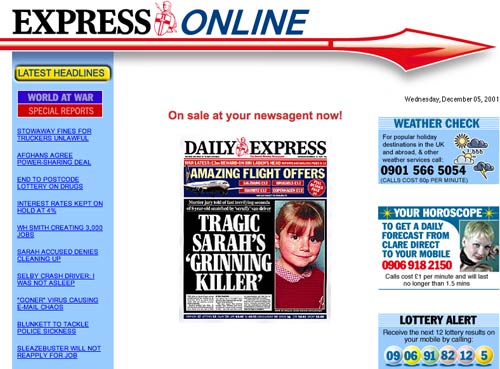
Searching for the Daily Express in 2001 turned up express.co.uk at number 3 on Google.
The homepage that Google links to shows that the attention of the Express was firmly turned to the Sarah Payne murder case.
Poignantly, a search for "sarah payne" in the vintage Google index still turns up a Police appeal for her as a missing person.
Daily Mail
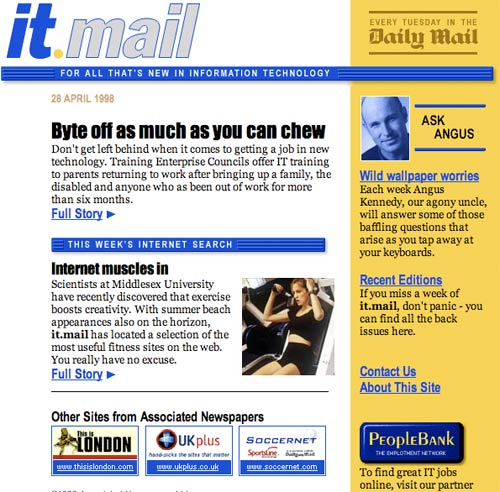
The Daily Mail website creeps in at #10 in Google's 2001 results when you search for 'Daily Mail'. This was a symptom of their fragmented approach to the web.
The Wayback machine retains examples of Daily Mail content from 1998, when their online presence was focused on IT topics.
Financial Times
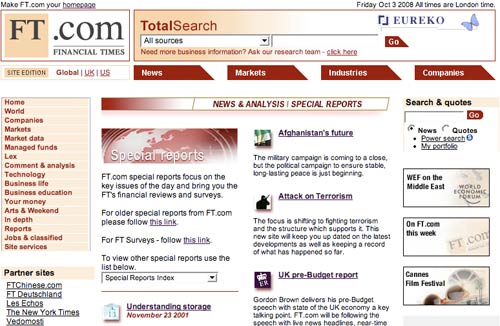
A search for the 'Financial Times' sees the FT site firmly at #1 in 'old' Google - but under the full length URL rather than the ft.com we know today.
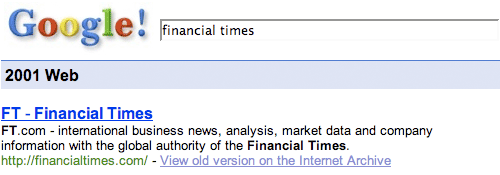
Google links to a version of the FT site that dates from December 2001, and I can't help noticing that their red 'special reports' branding looks very similar to a lot of the branding associated with BBC News today.
The Guardian
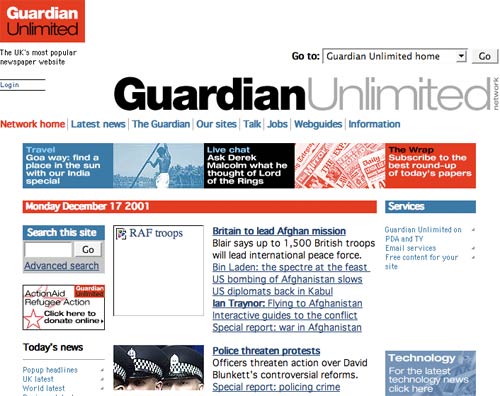
The Guardian have had one of the longest established British newspaper presences on the web, so it is no surprise to find them at #1 for a search for Guardian - or that the homepage Google links to doesn't look too unfamiliar, given that it hasn't been that long since this look and feel was retired.
The Independent
The Independent features at #1 on 2001 Google for a search of their name, with a description that echoes their old advertising slogan - "It is, are you?"
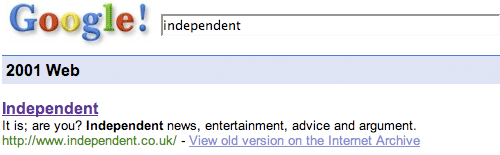
Sadly, the Wayback Machine seems to have mislaid their old CSS file, and so it is hard to get an impression of what the site used to look like.
The Mirror
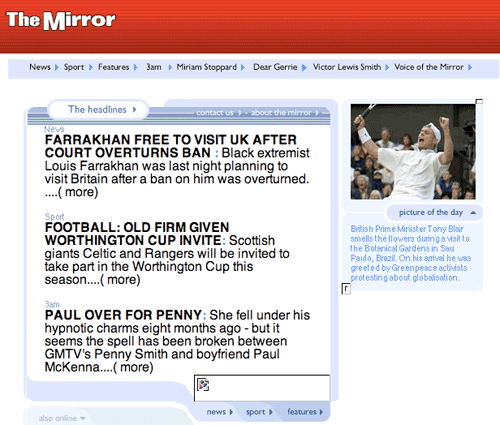
Of all of the old newspaper sites on display via Google 2001 and the Wayback Machine, it appears that The Mirror is the one that has changed the most.
The Sun
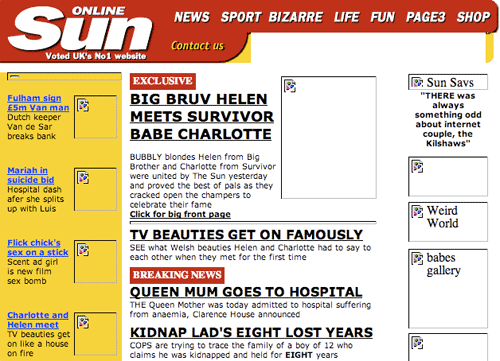
The Sun is a newspaper that has always struggled to hold down the number one spot for their name on Google. It is one of those things that shows a weakness of the Google algorithm. Since online links are such a valuable currency, The Sun newspaper always finds itself out-gunned by Sun Microsystems.
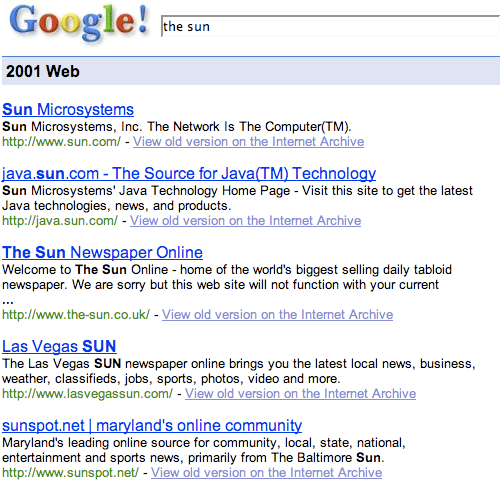
They were, though, able to out-rank the Las Vegas Sun and the Baltimore Sun.
The Telegraph
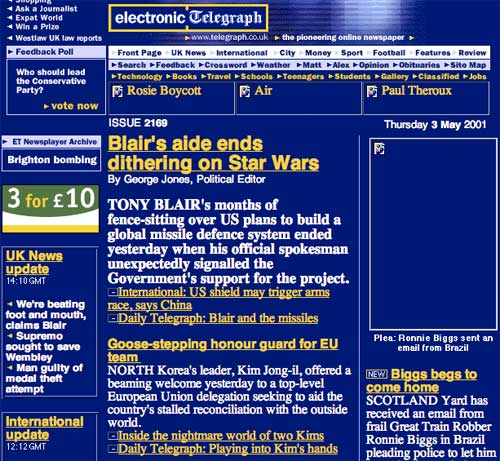
I adore the fact that in 2001 the online version of The Telegraph was titled The Electronic Telegraph, just like the device that gives the newspaper its name.
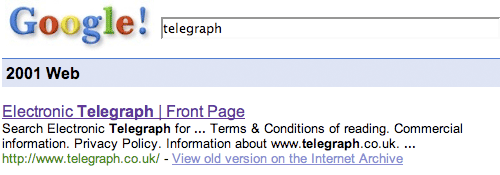
Google actually links to a version of the site from 2004, but the Wayback Machine also still hosts the heavily blue themed version from 2001.
The Times
The Times was top dog for their keywords in 2001, but not by using the timesonline.co.uk URL we are familiar with today.
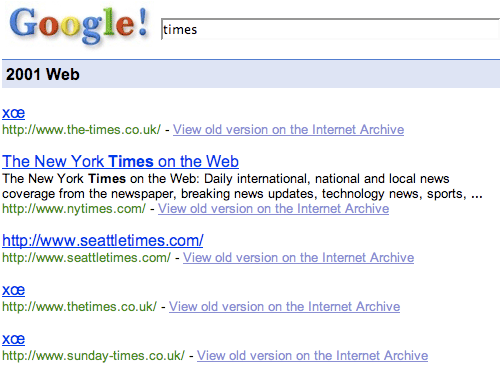
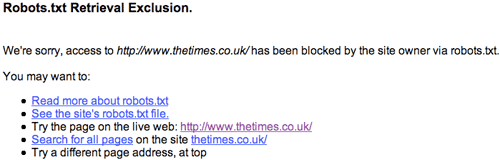
Sadly, The Times is one of those sites that has blocked the Wayback Machine from archiving the way their website looked, and they have not archived the old look'n'feel themselves
And finally...
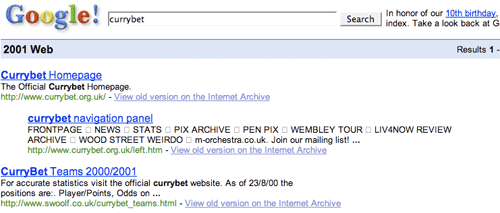
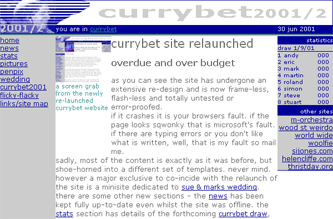
And this site? Well, my first currybetdotnet blog post was back in December 2002. Prior to that, the 2001 version of Google indexes currybet.org.uk, which exclusively concerned itself with pictures of weddings, joke articles about football, and the all-important results of the football sweepstake that still gives this site its name.
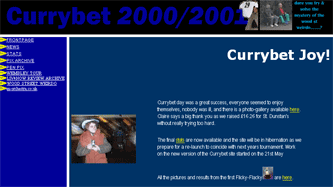
And how refreshing to see Google search results that aren't clogged up with adverts, YouTube and Wikipedia!
Interesting about the ft.com URL - especially as they were using the ft.com branding and URL towards the end of 1999, when I (briefly) worked for them. Indeed, the Wayback Machine has a page using ft.com branding back in 1998!
Now if you'll excuse me, I'm off to re-live the heady days of my own internet presence :)