
Server response codes interpreted as political censorship on the Newsnight blog
by Martin Belam, 28 March 2007
I'm sure when the great and the good in the formative days of the internet sat down and defined the server response status codes, they didn't expect them to be interpreted as political censorship.
However, there is a great comment on the BBC's Newsnight blog, in a piece about tonight's upcoming interview between Jeremy Paxman and Guido Fawkes, following what must have been a typo in the link URL to the clip.
I would like to watch, but on clicking your "just click here" link, I'm presented with a BBC 403- FORBIDDEN notice.
Forbidden by whom and why???
Please fix this or explain.
Bill Bartlett
Tampa, USA.
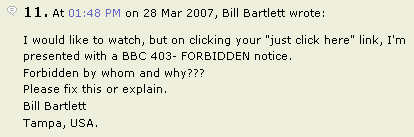
Nobody has had the heart in the thread to tell him what it means.
You can't really blame the guy, HTTP response codes are meant to be seen and interpreted by computers, not humans. 'Forbidden' is fairly unambiguous in normal language.
Clearly, it's easy for these misunderstandings to happen, so the BBC should look to improve the clarity of the pages returned when things go wrong. The BBC's 404 error page - http://www.bbc.co.uk/showmea404page - is actually quite good for this, although there's no reason to actually use the 404 numerical code on the page. Maybe they should do something similar for the other error situations...