
Smarter searching: liberating information from the Internet - Let the information come to you
 Download a print version of this article
This post is part of a series entitled "Smarter searching: liberating information from the Internet", based on my presentation at the 2006 AUKML Conference in Edinburgh
Let the information come to you
In the early days of the web you always had to go to sites and check to see if there had been any updates. Recently the advent of RSS has changed all that.
Whenever you see these badges on the internet it means that the page you are viewing is available in an alternative machine-readable format called RSS.
Or Atom.
But let us not quibble over the details - all the different flavours of web feed are essentially variations on a basic XML format - and pretty much interoperable.
What does all that mean in practice? Well, Yahoo! for example, produce their search results as an RSS feed. So if you want to check back on a particular search regularly, and you are using the Firefox browser - you can simply make a 'Live Bookmark' of the feed. This puts the current results right at your fingertips without having to re-visit the search engine.
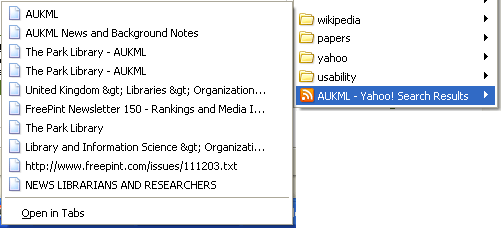
This kind of use of RSS technology is increasing - and the next versions of Microsoft's Windows, Explorer and Outlook software will all incorporate RSS to a greater degree.
You don't have to be using fancy new-fangled acronym laden technology to get information pushed to you from the search engines though. Google still has a service that relies on the good old-fashioned email protocol.
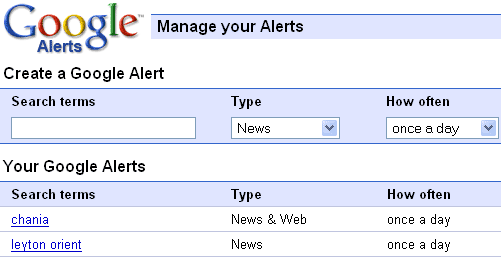
Google Alerts email you when there is new information indexed about your chosen topic. You can select to get information from the whole of Google's web index, or just from news sites. There are options to configure the emails to be sent daily, weekly, or on an ad hoc basis as new information is indexed.
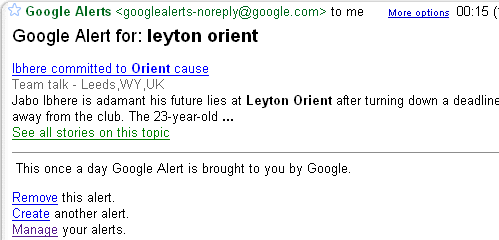
The emails consist of text extracted from the new information that Google has indexed, alongside links to view the content in the original context.
In part six of this article I will be looking at some possible improved future designs of search interfaces from Snap and Ask.