
Paul Mason Signs Off at Newsnig8t
Paul Mason has published a fantastic final post on his is-it-BBC-or-isn't-it-BBC Newsnig8t blog hosted at Typepad, talking about how and why he did it, and what he learned.
the BBC is developing its own blog software platform but I was not inclined to use it: whether it worked or not, and how many forms I would have had to fill in were secondary.
I'm interested in the phrase 'the BBC is developing its own blog software platform' - which spun a particular way sounds like the BBC is about to launch some sort of public blogging service. Actually, the BBC has had a public blogging service on the site for sometime, it just isn't called it - if you want something with a chronologically listed set of postings that people can add comments to then either h2g2 or collective will fit the bill nicely. BBC Scotland also have a separate public offering, albeit closely targeted to a specific audience, in Island Blogging.
As for the attraction of using Typepad, regardless of the form-filling, I can see what attracted Paul to it. BBC News has utilised the 'blog' format without really yet blogging - the comments are still on an 'email and publish' model, and although RSS has been widely embraced across the publishing platform, they have suffered from not having a recognisable top level URL. Both 'Weblog Watch' and 'From The Editor's Desktop' for example suffer in my view from not always having their most recent entry at bbc.co.uk/weblogwatch etc, or from having an easy << previous | next >> linking mechanism. However I notice with the diary BBC News have been publishing this week about how 'Rachel' has coped with the aftermath of the London bombings that the chronological nature of the entries is pushed right up under the users nose at the top, which I'm pleased to see.
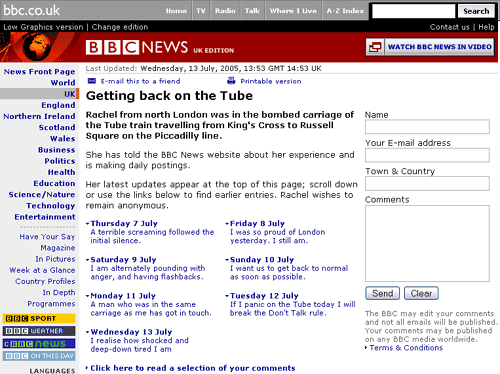
Paul Mason also expanded on his motives:
The whole reason I was keen to do this was to emulate some of the people I worked with during the time large corporations were embracing dot.com. There would be policy papers, theology, huge diagrammatic expositions but nobody was actually doing it. The people who made it through the dot.com transition were the people who adopted the JFDI principle, where the JDI principle stands for just do it: even if you fail you will accumulate intellectual and moral capital.
I understand where Paul is coming from - a couple of times within the BBC I have ended up launching public services after quietly making a 'pilot' of something, whilst in other areas three years of meetings, writing position papers, and doing business analysis have got me nowhere nearer to where I know the BBC needs to be.
Paul signs off - "Now I've done blogging maybe I will now do a Wiki.". I look forward to it.