
The Making of Doctor Who Webcasts
One great thing about working at the BBC is that sometimes you get to go to really interesting internal events that we are sadly unable to give the public access to. The News 50 exhibition was one such event, and this week I went to another, a hour long presentation on how the online Doctor Who animations had come together. Executive Producers Martin Trickey and James Goss came over to Bush House today to talk about how they happened, show us some clips, and then be coy and enigmatic about their plans for the future.
The first Doctor Who webcast, which featured Sylvester McCoy, was Death Comes To Time, back in 2001. It started as a radio pilot that Radio 4 didn’t pick up, which the /cult team decided to put some pictures to and broadcast on the web using RealPlayer and SMIL. It was pretty crude, and the audience of around 40 at today’s talk laughed as the TARDIS materialised in the space of around 4 sticky animation frames.
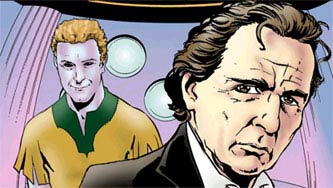
Martin Trickey said that they were surprised by the amount of publicity that it had received, especially as it was, as he described it, a rather “esoteric” piece, and probably not what people best remembered about Doctor Who. However, Dan Freedman’s attempts to revive the show on radio had been known for some time, and as much as fandom was crushed by Radio 4 dropping the project, it seized upon the webcast as the re-birth of a long lost friend. It was also one of the first times I noticed BBC producers interacting with their audience on the messageboards.
By that time the Big Finish produced Audio Plays had been going for some time - but there is something in-built in the Doctor Who fan genes that Doctor Who produced or broadcast by the BBC itself is so much more official. I can remember logging on in the middle of the night in Dubai whilst staying with my in-laws to catch the first episode when they began webcasting the full-length version of the story.
After Death Comes To Time, they next used Colin Baker as the Doctor, in a story featuring Cybermen, called Real Time.
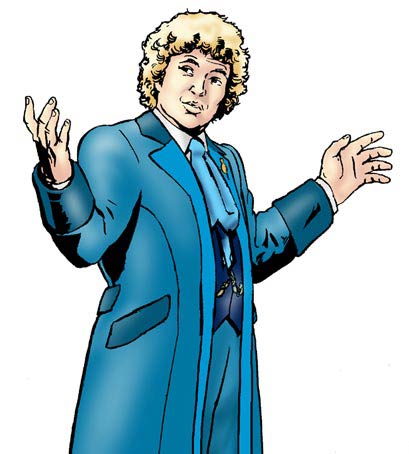
This defied a Doctor Who convention, that any story that uses ‘time’ in the title is generally rubbish (see The Time Monster or Timelash, or in fact the whole of The Trial Of A Time Lord season), by being very good indeed. So good that even my wife watched it with me over 56k modem. The animation was still very crude though, although the original illustrations supplied by Lee Sullivan, who also did Death Comes To Time, were good.
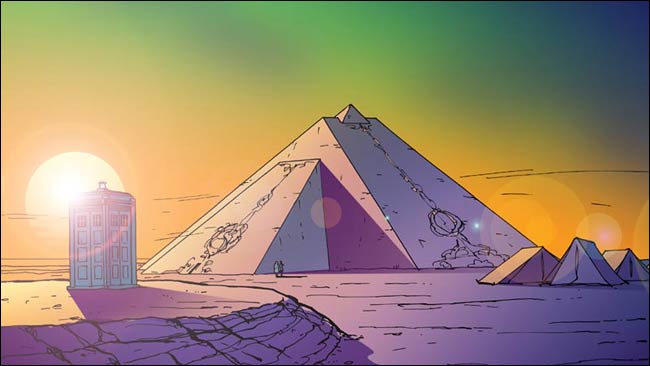
Martin likened the webcast format to the old Flash Gordon Saturday morning matinee - where you were shown just enough to get you hooked to make sure you came back the following week.
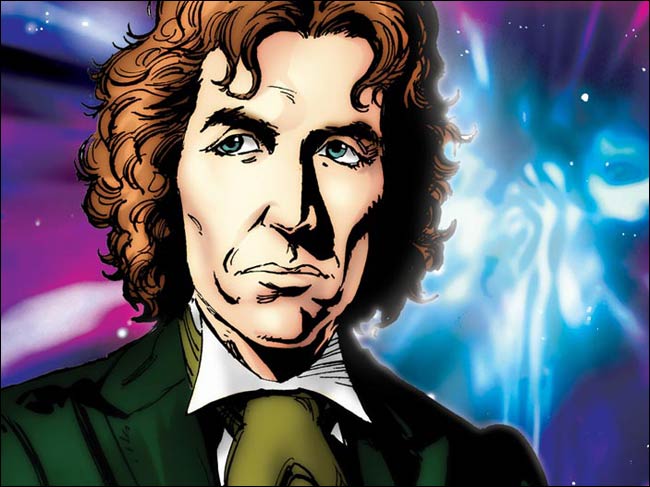
Shada followed Real Time as a 21st century remount of a Tom Baker era Douglas Adams penned story that had been abandoned during production due to industrial action. For the webcast Paul McGann travelled in time to meet up with Tom’s trusty companions Romana and K9, citing unfinished business, and rendering several continuity handbooks redundant.
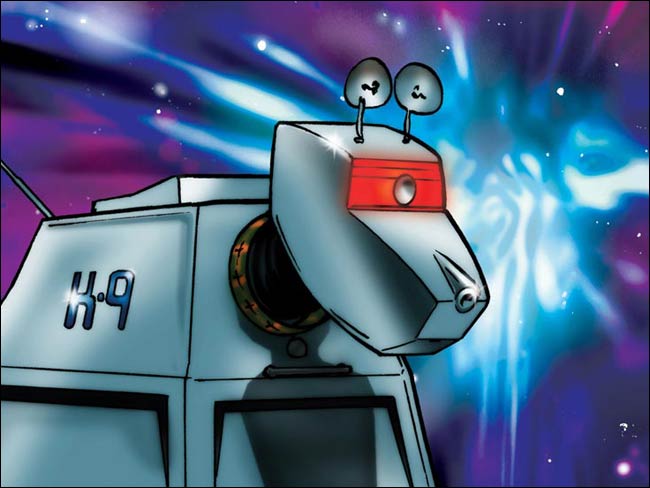
Personally I have to dissent here and say that as much as I enjoy Douglas Adam’s work on the Hitch Hikers series, I have never felt comfortable with the style of humour that he brought to Doctor Who - and Shada doesn’t work for me. However the animation was improving, this time done in Flash, and the stories were getting great traffic for the site.
So what next? Well, with no further developments on the horizon the team behind the animations decided to go hell-for-leather in making a “credible online future” for Doctor Who, by casting an all new 9th Doctor, Richard E. Grant, in an all new adventure written by Paul Cornell. Thus “Scream of the Shalka” was born.
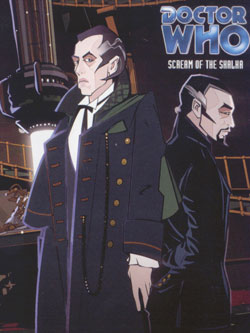
The challenge Cornell faced was outlined by James Goss - a typical 25 minute episode of Doctor Who could probably be condensed into 5 minutes of television today, and 3-and-a-half minutes of animation. The format needed to be re-invented to suit the medium. The difference was simple. In the old series you would have someone rushing in to say “Doctor, there’s a whole army out there. And they all have guns”. In a webcast animation, you are giving instructions to an animator, saying “Can you draw me a whole army of monsters. Oh, they have guns”.
Martin and James put much of the success of Shalka down to the script editing which ensured, as James put it, that unlike ‘old’ Doctor Who, every character had an arc, and every character actually had a character. In the end the BBC produced the audio, and Cosgrove Hall, of Danger Mouse and Count Duckula fame, produced the pictures. As James pointed out, it was to his knowledge the only full-length TV broadcast quality British produced animation made last year.
With mere weeks to go before the launch of the animation on November 13th 2003, a bombshell descended on them. It was announced in September that Doctor Who would be returning to BBC One.
The guys put a brave face on it, and reckoned that the publicity surrounding the announcement of the new series added to their profile. For Shalka they were getting weekly visits from around ten times the estimated amount of hardcore Doctor Who fans (judging by the video, DVD and book sales).
However, with the new production of “proper” television Doctor Who underway (with an accompanying tabloid frenzy) the chances are that Shalka will end up a one-off. A shame as it made a promising start to an arc of stories - why was the Master on board the TARDIS? Why was the Doctor once again seemingly at the beck-and-call of the Time Lords? And, well, what the hell happened to Paul McGann’s Doctor anyway?
On the other hand we are getting a new TV series, so I can't moan too much ;-)
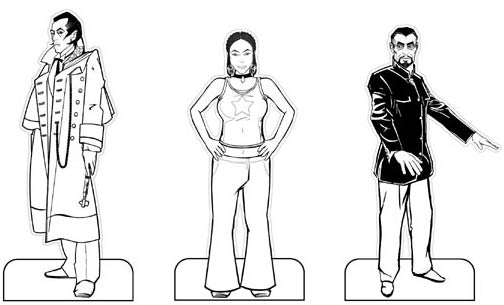
(Although I would desperately like one of the life-size cardboard cut-outs of the animated characters they had on display today, which fill me with fannish jealousy every time I visit Centre House)

“Who’s Who? The Resurrection of the Doctor” charts how the Guardian has covered Doctor Who since it was revived in 2005. If features interviews with Christopher Eccleston, David Tennant, Matt Smith and the men in charge of the show's fortunes: Russell T. Davies and Steven Moffat. It also includes interviews with a host of other Doctor Who actors including Billie Piper, Freema Agyeman, John Barrowman and writers including Neil Gaiman and Mark Gatiss. There are contributions from legendary author Michael Moorcock, Seventh Doctor Sylvester McCoy, and specially commissioned illustrations from Jamie Lenman.
“Who’s Who? The Resurrection of the Doctor” - £2.99 for Kindle & iBooks.
I would fight you for those cutouts anyday.
Glad to see Doctor Who back in any form. Hopefully they can get a resolution to the plot lines of the animated series though. I always hate it when series get cut during an obvious arc that will never get to be resolved.