
Using 'TEST' as a test search term is quite testing for TravelMail and others
A few weeks back I published some OpenSearch plugins for Internet Explorer 7 and Firefox 2 covering British newspaper websites and several BBC related queries, and recently additionally added plugins for the BBC iPlayer.
It isn't rocket science to put these little snippets of XML together, but it did take a little bit of fiddling around in order to make them work on both browsers.
Most tools to automatically generate these plugins have been written by the open source community with Firefox in mind, and so support a couple of bits of the OpenSearch standard that Internet Explorer has not implemented. Meanwhile the automatic plugin generator for Internet Explorer 7 produced XML with a query string that would work in Firefox, but didn't associate an icon with the plugin (as IE doesn't display one), or make the description readable to humans.
My solution was to make a dedicated plugin file for each, and then munge the bits of XML that worked together, which meant using Internet Explorers auto-generator a lot.
This relies on the user searching a site using the search terms "TEST", and copying the resulting URL into a configuration page within Internet Explorer. The browser then replaces the word TEST in the URL with the specific required OpenSearch markup for {searchTerms}.
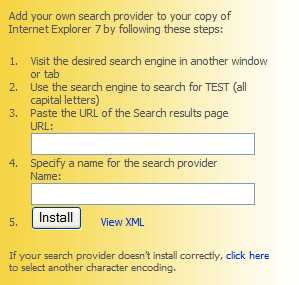
This only works where the search term actually appears in the URL, so users can't make plugins for sites like The Telegraph which hide the workings of their search engine from the end user.
One of the side-effects of Microsoft choosing "TEST" as the trigger search word though, is that it exposes people who have 'test' content on their live site which is still being actively indexed by their search engines.
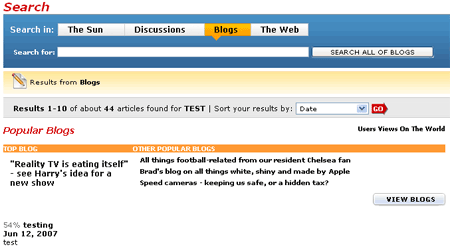
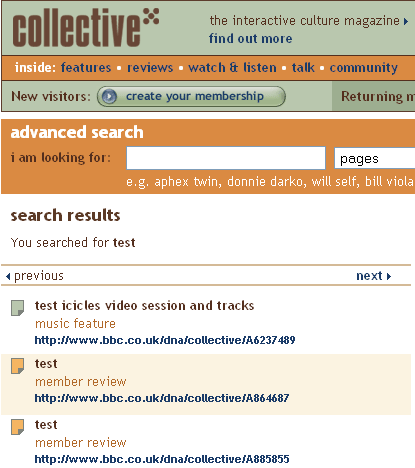
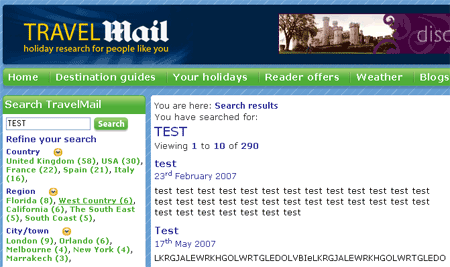
The TravelMail example is particularly funny, as those page definitely cannot have been created by users, and must have been made by employees testing the system. The TravelMail site has only recently been launched incidentally, and not without problems more serious than leaving a bit of test content up live. As I understand it, this top secret much anticipated under-wraps project from the Daily Mail was visible well before launch at an easily guessable unprotected URL.
your comments were noted and cleaned up.